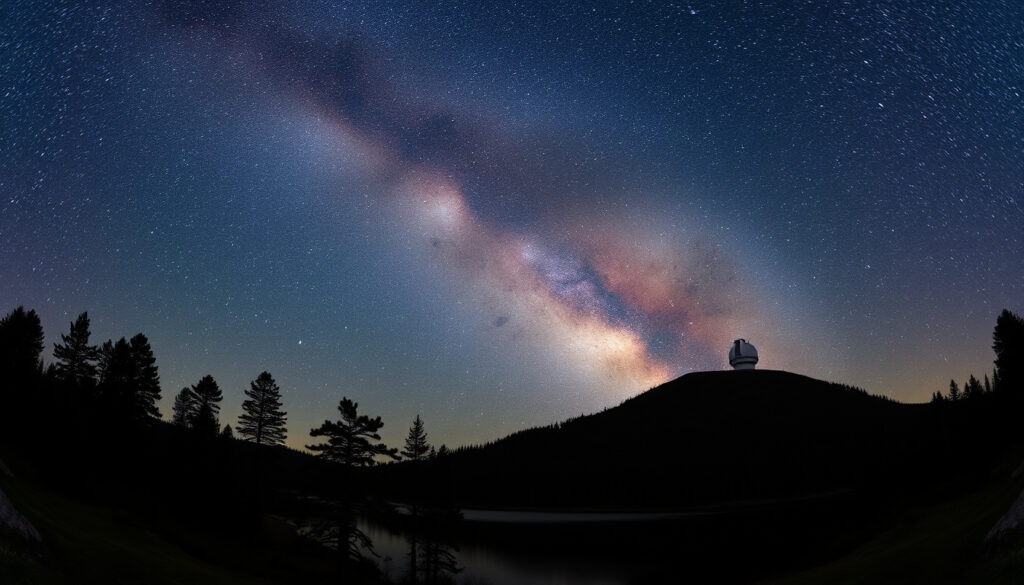
Best Places to Stargaze: Top Global & European Dark Sky Sites
There’s a moment, on a truly dark night, when the sky stops being a backdrop and becomes the main event—that shift from looking at stars to feeling the galaxy turn overhead drives people to seek out the planet’s darkest corners. This guide cuts through the hype and wishful thinking to show you exactly where to find those skies, from Chile’s Atacama Desert to Ireland’s southwest coast, with hard data, official certifications, and practical steps for planning your own night under the stars.
International Dark Sky Reserves worldwide: 20+ ·
Bortle scale class 1 – darkest skies: less than 1% of land area ·
Best Milky Way visibility in northern hemisphere: April to September ·
Kerry International Dark Sky Reserve area: 700 km²
Quick snapshot
- Highest clarity on Earth — home to ALMA observatory (ESO (astronomical research organization))
- 13 observatories on summit at 4,207 m elevation (University of Hawaii Institute for Astronomy (astronomy research institute))
- First dark sky reserve in Ireland, Bortle class 2-3 skies (BBC Sky at Night Magazine (astronomy publication))
- International Dark Sky Reserve — dark skies near London (South Downs National Park Authority (UK national park authority))
The table below provides a comparison of key specifications for the world’s best stargazing sites, focusing on measurable data.
| Location | Key specification | Source |
|---|---|---|
| Kerry International Dark Sky Reserve, Ireland | 700 km² — largest Irish dark sky reserve | BBC Sky at Night Magazine (astronomy publication) |
| Mauna Kea, Hawaii | 4,207 m — highest altitude stargazing site | University of Hawaii Institute for Astronomy (astronomy research institute) |
| Atacama Desert, Chile | <1 mm rainfall/year — driest desert for stargazing | ESO (astronomical research organization) |
| Pic du Midi, France | First European dark sky reserve (2013) | International Dark-Sky Association (dark sky certification body) |
| South Downs National Park, UK | One of 18 International Dark Sky Reserves | South Downs National Park Authority (UK national park authority) |
| Mayo Dark Sky Park, Ireland | Ireland’s second Dark Sky Place | BBC Sky at Night Magazine (astronomy publication) |
| OM Dark Sky Park, Northern Ireland | In County Tyrone — public observatory | AFAR (travel publication) |
| Inis Mór, Aran Islands | Among darkest skies in Ireland per BBC Sky at Night | BBC Sky at Night Magazine (astronomy publication) |
Where is the best place in the world to stargaze?
Top global dark sky reserves
- The Atacama Desert in Chile has the clearest skies on Earth due to high altitude and extreme low humidity — the region averages less than 1 mm of rainfall per year (ESO (astronomical research organization)).
- Mauna Kea in Hawaii stands at 4,207 m above sea level and hosts 13 professional observatories, including some of the world’s most powerful optical telescopes (University of Hawaii Institute for Astronomy (astronomy research institute)).
- The International Dark-Sky Association certifies reserves worldwide that meet rigorous lighting and conservation standards (International Dark-Sky Association (dark sky certification body)).
Atacama Desert vs Mauna Kea
Two sites dominate the conversation for “best in the world,” but they serve different audiences. The Atacama offers year-round clarity and the driest conditions on the planet — a boon for long-exposure astrophotography. Mauna Kea’s summit is higher, but access requires a four-wheel-drive vehicle and altitude acclimatization; the visitor center at 2,800 m provides a more accessible option for the public.
Atacama wins on dryness and stability; Mauna Kea wins on altitude and observatory infrastructure. For a beginner planning a first trip, the Atacama’s lower altitude and tourist-friendly infrastructure around San Pedro de Atacama make it more practical.
The pattern: The world’s top sites share three traits — low humidity, high altitude, and minimal light pollution. The Atacama and Mauna Kea are outliers on all three, but they are not the only options for a memorable night under the stars.
Where is the best place to stargaze in Europe?
European dark sky parks
- Europe now has more than a dozen certified dark sky reserves and parks, concentrated in the UK, Ireland, France, Germany, and the Czech Republic (International Dark-Sky Association (dark sky certification body)).
- Pic du Midi in France, designated in 2013, was the continent’s first International Dark Sky Reserve (International Dark-Sky Association (dark sky certification body)).
- European sites are often located near coastlines, which can offer clearer skies due to stable maritime air (BBC Sky at Night Magazine (astronomy publication)).
South Downs National Park (UK)
South Downs is one of 18 International Dark Sky Reserves worldwide and sits within two hours of London, making it Europe’s most accessible major dark sky site (South Downs National Park Authority (UK national park authority)). The park runs annual stargazing festivals and has public viewing areas with dedicated signage.
Kerry International Dark Sky Reserve (Ireland)
Kerry International Dark Sky Reserve, designated in 2014, is the first such reserve in Ireland and covers roughly 700 km² of County Kerry’s southwest coast (AFAR (travel publication)). The reserve sits at a Bortle scale of class 2-3, meaning the Milky Way is visible to the naked eye on clear nights (BBC Sky at Night Magazine (astronomy publication)).
For a European traveler without the budget for Chile or Hawaii, Kerry offers world-class darkness (Bortle 2) with a 1.5-hour guided tour for 35 euros — the best value-for-accessibility ratio on the continent (Kerry Dark Sky Tourism (reserve’s official tourism provider)).
The catch: Europe’s dark skies depend heavily on Atlantic weather. The same coastlines that provide stable air also bring cloud cover. Winter months in Kerry can gift 16 hours of darkness per night, but clear skies are never guaranteed (AFAR (travel publication)).
Where is the darkest sky in Ireland?
Kerry International Dark Sky Reserve
- Kerry International Dark Sky Reserve holds a Gold Tier certification from the International Dark-Sky Association, indicating exceptionally dark skies (Wikipedia (encyclopedia, tier-3 source — used conservatively)).
- The reserve is located in the Iveragh Peninsula, with about 4,000 residents across its area, keeping artificial light extremely low (AFAR (travel publication)).
- Guided stargazing tours start from 35 euros and last 1 hour 30 minutes, meeting at the Church car park in Castlecove (Kerry Dark Sky Tourism (reserve’s official tourism provider)).
Sheep’s Head Way and other dark sky sites
- Sheep’s Head Way in County Cork is designated as a dark sky place of Ireland (AFAR (travel publication)).
- Mayo Dark Sky Park, in the northwest, is Ireland’s second certified Dark Sky Place (BBC Sky at Night Magazine (astronomy publication)).
- Inis Mór on the Aran Islands is described by BBC Sky at Night Magazine as one of the darkest places the writer has ever traveled with a telescope (BBC Sky at Night Magazine (astronomy publication)).
- The southwest coast of Ireland — including the Ring of Kerry and Beara Peninsula — offers the darkest skies on the island due to minimal light pollution from small rural populations (AFAR (travel publication)).
What this means: Ireland now has four certified dark sky sites — Kerry, Mayo, Sheep’s Head, and OM Dark Sky Park in Northern Ireland — making it the most accessible destination in northern Europe for a certified dark sky experience (BBC Sky at Night Magazine (astronomy publication)). For mer innsikt om de beste stedene for stjernekikking, se Kilde irelandmediahub.com insights.
Is Ireland good for stargazing?
Pros of stargazing in Ireland
- Two certified International Dark Sky Reserves (Kerry and Mayo) plus additional dark sky places at OM Dark Sky Park and Sheep’s Head Way (BBC Sky at Night Magazine (astronomy publication)).
- Ireland’s position on the Atlantic coast, far from major European light domes, keeps skies in the west exceptionally dark (AFAR (travel publication)).
- Kerry Dark Sky Tourism offers guided tours at 35 euros — affordable compared to guided astro-tourism in Chile or Hawaii (Kerry Dark Sky Tourism (reserve’s official tourism provider)).
- Stargazing season runs from August (Perseid meteors) through winter, with up to 16 hours of darkness per 24-hour cycle in December (AFAR (travel publication)).
Challenges: weather and light pollution
- Atlantic weather is unpredictable — cloud cover can block views even on nights forecast as clear (BBC Sky at Night Magazine (astronomy publication)).
- Rural areas west of the River Shannon have very low light pollution, but even small towns along the Wild Atlantic Way can produce enough glow to degrade the darkest sites (AFAR (travel publication)).
- Ireland’s short summer nights (less than 6 hours of astronomical darkness in June) limit deep-sky observing during warmer months.
The trade-off: Ireland offers the cheapest certified dark-sky experience in Europe — but it requires patience with weather. For a traveler who values certainty over cost, the Atacama or Mauna Kea are better bets. For a budget-conscious astro-tourist who wants to see the Milky Way from a Gold Tier reserve, Kerry is unmatched.
What month is best for stargazing?
Best months for Milky Way viewing
- The Milky Way core is visible from April to September in the northern hemisphere, peaking in July when the galactic center is overhead all night (Time and Date (astronomy reference site)).
- In Ireland, the best window is August (Perseid meteor shower starts mid-month) through autumn, when the Milky Way forms a high arc across the southern sky (AFAR (travel publication)).
- April marks the start of Milky Way season at the Kerry reserve, with the galactic core rising before dawn.
Winter vs summer stargazing
- Winter months offer longer nights — up to 16 hours of darkness in December in Ireland — but colder temperatures and more cloud cover (AFAR (travel publication)).
- Winter skies feature Orion, Taurus, and the Pleiades — bright stars and easy-to-find constellations — making winter ideal for beginners.
- Summer nights are shorter but warmer, with the Milky Way visible all night at mid-northern latitudes in July.
Moon phase impact
- The new moon phase provides the darkest conditions — plan trips within 3 days of the new moon for optimal viewing (Time and Date (astronomy reference site)).
- A full moon raises sky brightness by roughly 1,500 times compared to a dark sky, washing out the Milky Way entirely.
The implication: For northern hemisphere travelers, July gives the best balance of warm weather and midnight Milky Way visibility. For Ireland specifically, late August through early September offers dark skies, the Perseid meteor shower, and Atlantic temperatures still above 10°C.
Ireland’s southwest coast offers some of the darkest skies in Europe, with certified reserves that rival much more famous sites for clarity.
The reserve is a haven for astronomers and casual stargazers alike, with guided tours that make the night sky accessible to anyone who can drive to Castlecove.
Kerry International Dark Sky Reserve Coordinator (reserve’s official tourism body)
Steps for planning a stargazing trip
- Check the moon phase calendar and pick a date within 3 days of the new moon (Time and Date (astronomy reference site)).
- Use a light pollution map to find the nearest dark sky site — for Ireland, Kerry and Mayo are the best options.
- Book a guided tour — Kerry Dark Sky Tourism offers 1.5-hour sessions from 35 euros (Kerry Dark Sky Tourism (reserve’s official tourism provider)).
- Let your eyes adjust for 20 minutes before looking through a telescope or binoculars.
- Bring warm clothes and a red-filtered flashlight — white light destroys night vision for everyone nearby.
- Check weather forecasts hour-by-hour; cloud cover can change rapidly on the Atlantic coast.
Relatert lesning: Mo i Rana – alt du trenger å vite om byen under Polarsirkelen · Røros julemarked 2025 – Datoer, program og praktiske tips
alanrogers.com, darksky.org, stemandmint.com, reddit.com, reddit.com, facebook.com, facebook.com, whc.unesco.org
Frequently asked questions
What equipment do I need for stargazing?
You can start with just your eyes and a star chart or smartphone app. Binoculars (7×50 or 10×50) improve views significantly. A small telescope (4-6 inch Dobsonian) reveals planets and deep-sky objects but is not required.
How to read a star chart?
Hold the chart overhead and align it with north. The chart’s outer edge represents the horizon; the center marks the point directly above you. Match bright stars and constellations to the pattern.
What is a Bortle scale?
The Bortle Dark-Sky Scale rates night sky brightness from class 1 (excellent dark sky) to class 9 (inner-city sky). Class 1 covers less than 1% of the world’s land area. Kerry is Bortle class 2-3.
Can I stargaze in a city?
You can see the Moon, planets, and the brightest stars from a city, but the Milky Way requires a journey to Bortle class 4 or darker. Urban light pollution blocks faint deep-sky objects.
How to photograph the Milky Way?
Use a DSLR or mirrorless camera with a fast wide-angle lens (f/2.8 or faster). Set ISO 3200-6400, shutter speed 15-25 seconds, and shoot on a tripod. A remote shutter prevents camera shake.
What time of night is best for stargazing?
Astronomical twilight ends when the Sun is 18° below the horizon — that’s when the sky is fully dark. In summer at mid-latitudes, that can be after midnight. In winter, full darkness arrives by 7-8 PM.
Confirmed facts
- Kerry International Dark Sky Reserve is a certified dark sky reserve (AFAR (travel publication)).
- Mauna Kea is a top stargazing site with professional observatories (University of Hawaii Institute for Astronomy (astronomy research institute)).
- Atacama Desert has the clearest skies on Earth (ESO (astronomical research organization)).
- Kerry was designated a dark sky reserve in 2014 (AFAR (travel publication)).
What’s unclear
- Best month for stargazing varies by hemisphere and latitude — no single month fits all locations.
- Milky Way visibility depends on local weather and light pollution on the specific night.
- Exact number of dark sky sites changes as new reserves are certified — check the IDA website for current counts.
- The quality of stargazing experiences in Ireland depends heavily on unpredictable Atlantic weather patterns.
The gap between a good stargazing trip and a great one comes down to three variables: location certification (Gold Tier matters), moon phase (new moon or bust), and weather humility (especially in Ireland). For the reader planning a trip from Norway or neighboring countries, the choice is clear: Kerry offers the cheapest Gold Tier darkness in Europe, but requires patience with Atlantic clouds. If you want guaranteed clear skies on a specific date, save up for Atacama. If you want the most accessible dark sky within a weekend’s drive from Oslo, Kerry is it — book the tour, bring a wool sweater, and check the moon calendar before anything else.
Flere relaterte innlegg
 Bislett Kebab Kalbakken – Meny, priser og bestilling
 PKR to NOK – Live kurs, historikk og konvertering
 Jerry og Marge Go Large: Virkelig historie og hvor du ser den
 True Religion Jeans – Stiler, Passform, Historie og Kjøpsguide 2025
 Sport Outlet Strømmen – Butikk, åpningstider og priser
 Tote Bag Dame: Praktiske Skinnmodeller fra Marc Jacobs
 Kong Harald Ung – Første Norskfødte Prins på 567 År
 Rema 1000 Lierstranda – Adresse, Åpningstider og Tilbud